Логотип – ПРАЙМХОЛОД

Applying cold in fish industry

Fish belongs to shortlived commodities. That is why fish from the moment of capture till the final processing must be stored in conditions that inhibit the development of autolytic and bacterial processes. The speed of these processes depends on the environmental temperature and the fish sort. Supporting low temperature of the fresh fish trunks it is possible to slowdown the deterioration processes significantly. Quick fish cooling down to cryoscopic temperature (when the major water mass becomes frozen) postpones the term of post mortem rigidity that is followed by destructive microbiologic processes. In slow fish cooling the speed of microbiologic and biochemical processes is higher than the cooling speed, and unwanted changes in fish may occur before it becomes cooled.

As fish and marine products processing also takes place on fishing vessels and on land-based plants, the assortment of freezers is quite big offering different constructions to satisfy needs of adaptation to different industrial conditions. As soon as fish is captured it must be exposed to low-temperature processing. Otherwise it inevitably begins to spoil, and the quality of fish products will be irreversibly lost.

A big part of sea fish is offered for sale in the blocks of standard size (800Х250Х60 millimetres).

As such products is easier to store and transport in such a way. On the factory floor fish freezing is performed in vertical and horizontal multiplate freezing machines that have slightly different construction but have the same intended purpose. Their operation principle is rather simple: fish is placed between two metal plates, and cold agent circulates inside.


In such a manner a high heat transfer level is provided. As a result freeze-quenching is performed very quickly. Multiplate freezing machines possess high productivity.

Refrigerating equipment in fish industry is based on the principle of cold chain continuity. This means that from the moment of primary products producing to coming to customers food products are constantly processed by cold.

The expiry date of cooled products depends mainly on the quality of raw fish, the way and duration of cooling and storage conditions. Significant changes occur in fish under cooling: the increase of tissue density and stickiness of blood and tissue juice, fish weight decrease due to partial moisture evaporation from its surface when cooling in air environment (fish shrink). The level of shrinking is defined by fish qualities the condition of cooling environment. Density, size, the existence and type of package during cooling and storage mainly influence on the shrink level.

Cooling in cold seawater (immersion cooling) helps to preserve the fish quality. However, in long-term storing (more than a day) in seawater ground tissues begin to swell up. As a result the fish skin becomes vulnerable to mechanical and thermal destruction.

Cooling fish with ice-and-salt mixture allows obtaining quicker and deeper cooling of fish trunks (to -2/-3°С). However, diffusion osmotic process takes place in such type of cooling. As a result, the concentration of salt is increased in surficial tissues of fish trunks.

Cooling fish by cracked ice is implemented by covering the fish layers by finely crushed ice in any type of containers. Fresh ice and seawater ice (artificial and natural) is used for fish cooling. Artificial ice is produced by an ice freezer. The amount of ice for cooling the freshly-caught fish is 75% from its weight. To increase the expiry term antibiotics are added to the ice (usually it is chlortetracycline and oxytetracycline).

Sometimes fish light freezing is applied, allowing increasing the expiry period up to 20-25 days. Fish is put into the cold air (-30 °С) for two hours or in -10 °С pickle for 15-30 minutes. The environmental temperature for fish transportation and storage should not be higher than -1°С.

Long-term fish storage is possible with freezing. The process of fish freezing is characterized by turning the most of its moisture into ice. Fish freezing is accompanied by significant biochemical and chemical changes. Biochemical changes come down to suppressing the activity of microorganisms living on the fish surface and inside it, as well as to lowering the number of bacteria on its surface right after freezing.

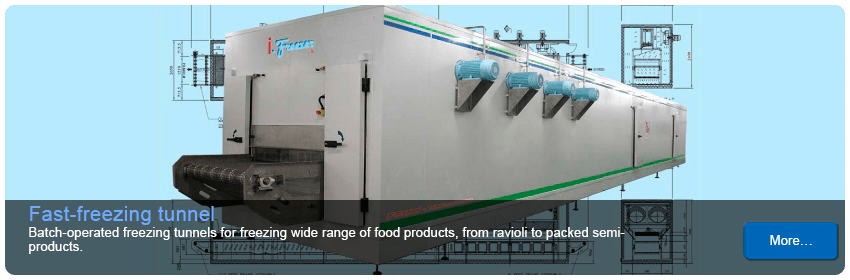
On fishing vessels fish is usually frozen in blocks of a standard size (800*250*60) for optimal use of piling space and storage simplicity. Air freezers (cabinet-type, conveyor, gravity freezers), as well as plate freezers are used. In plate freezers fish is frozen between plates where cold agent circulates. Single piece and block freezing is applied on the shore cold stores, using shelf, conveyor and plate freezers. Fish and fish products (such as fish fillet) is frozen under the cold air stream with the temperature of -35°С. Higher temperature leads to worsening the fish quality: slow freezing forms big ice crystals in fish body. It also breaks cells and spoils marketable condition and taste qualities.


The frozen fish is stored in cameras with the temperature of -18 (short-term storage) and -25°С (continuous storage). The development of microorganisms stops in the temperature of -12°С and lower. That is why microbiologic changes in frozen fish are insignificant in such storages. It should be taken into account that microorganisms bear low temperatures better than high temperatures. The unfavourable storage conditions (like environmental bacterial infection, high air humidity, significant initial product infections) may cause mould development. The lower temperature is in the camera, the slower fish spoils.

Long-term fish storage becomes possible when applying modern refrigeration chambers.

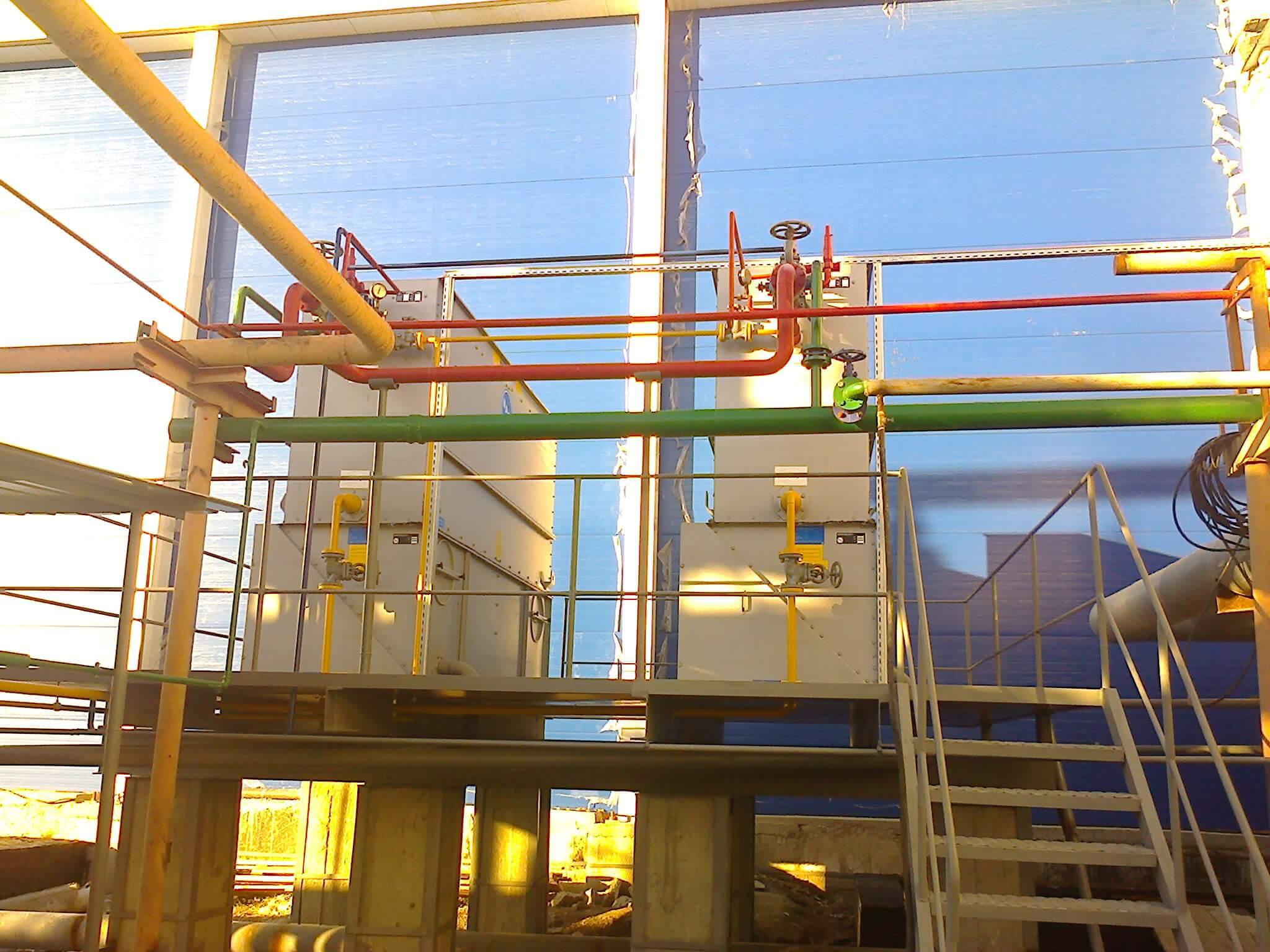
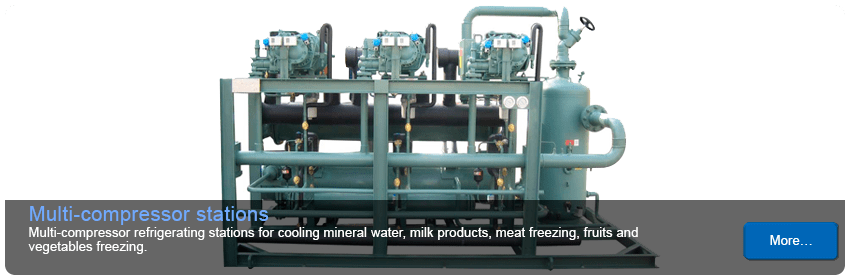
PRIMEHOLOD produces such refrigerators of sandwich panels with excellent heat-insulating characteristics and equips them with high-performance compression-condensation refrigerating apparatuses. In case of storing big amounts of fish big refrigerator warehouses are constructed. They are equipped by automated systems for supporting the required environmental parameters. Their maintenance doesn’t required big number of personnel, management and control can be performed from one desk.

Refrigerator warehouses and chambers are thermally insulated loops equipped by doors of different construction, providing high degree of leakage.

In fish processing workrooms an industrial air conditioning is applied for supporting the microclimate with Т= +8...+12°С (air temperature), V= 0,1...0,3 mps (air velocity), j = 70...75% (relative humidity).

"PRIMEHOLOD" -
is a multifunctional enterprise,
that implements large
projects

for complex equipment
of refrigeration supply systems

Fill in the application for the product
or service you are interested in.
We will contact you as soon as possible!

PRIMEHOLOD provides
design, construction and
reconstruction of
low-temperature warehouse rooms,
selecting of the optimal equipment.

© 2018 PRIMEHOLOD. All rights reserved